Uhren- und Zeitmesstechnikmuseum Karlstein
Museum
This business is excellent…

Description
The clocks tick differently in Karlstein.
The clock museum on the main street gives you an insight into the craft of clockmaking and its special significance for Karlstein.
The history of watchmaking in Karlstein
As agriculture in the Waldviertel was always somewhat poor due to the poor soil and harsh climate, the population looked for a sideline, which they mainly found in weaving. For many places, the textile industry remained dominant ("Bandlkramerlandl"), but this suffered a decline towards the end of the 20th century. In contrast, watchmaking had developed in and around Karlstein.
As luck would have it, it was at this time, around 1730, that an immigrant from the Bohemian Forest named Pfeiffer came to the region. In Münchreith, he tried his luck with the watchmaking skills he had acquired in his homeland. He found employees to whom he passed on his knowledge.
Clock and timekeeping museum
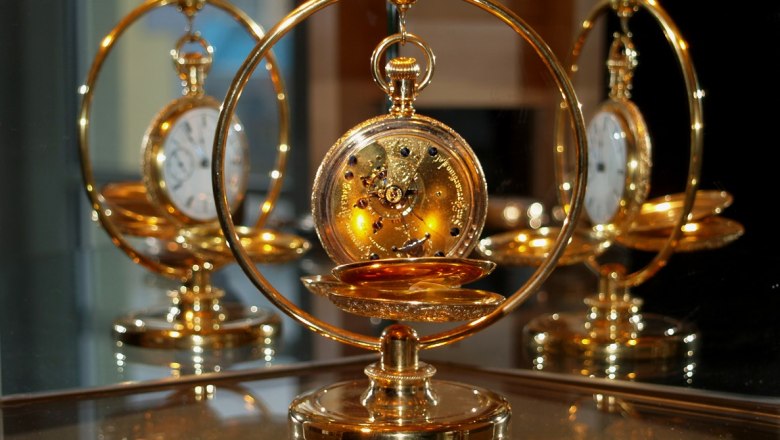
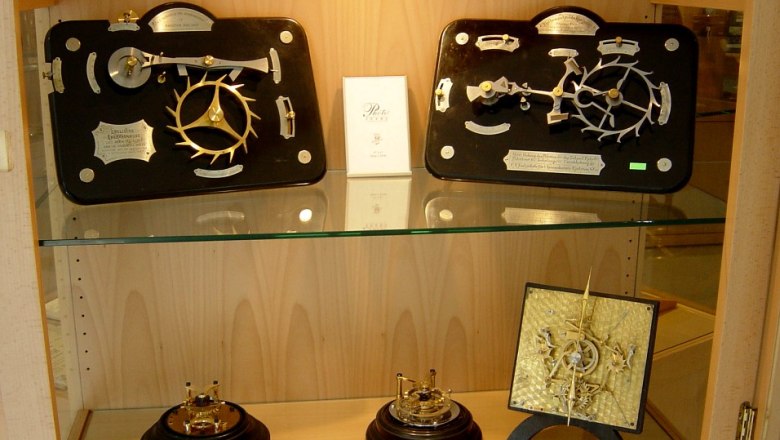
Around 200 exhibits can be admired in the Clock and Watch Museum. You can see machines and tools, various models, regulators and constructions, a passage instrument for determining time as well as calculating machines, construction drawings and, of course, clocks.
Children who are just learning about time are just as welcome at the Karlstein Clock Museum as older people who are interested in clockwork technology.
The Karlstein Clock Museum has a large number of different clocks on display in well-lit showcases. Families can also see models of escapements, striking mechanisms and perpetual calendars, tools, measuring instruments and machines.
In the "living workshop" in the Karlstein Clock Museum, clocks are repaired by a clockmaker and small series of precision pendulum clocks, planetariums, table clocks and wristwatches are also produced by hand.