Haslauer Moor
Outdoor adventure
Description
The Haslauer Moor seems almost alien with its unique flora and fauna. Moorland areas have become rare in Austria, so it is all the more special that several have been preserved in the Waldviertel. A hiking trail, the "Pfad", leads through the moor and informs visitors with numerous information boards.
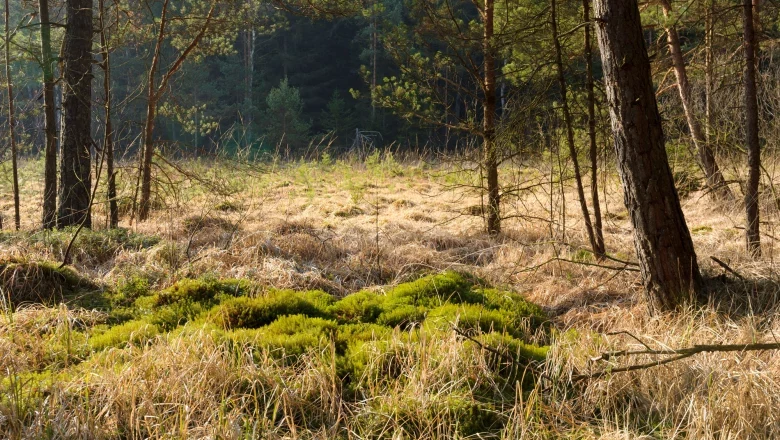
When the morning sun rises over the Haslauer Moor, nature awakens from its deep slumber. Early in the morning, there is a particularly peaceful atmosphere in the bog pine forests, the moss cushions and the former peat bogs. If you plan your hike well, you can experience this magical atmosphere up close. But the Natura 2000 protected area is also impressively beautiful during the day.
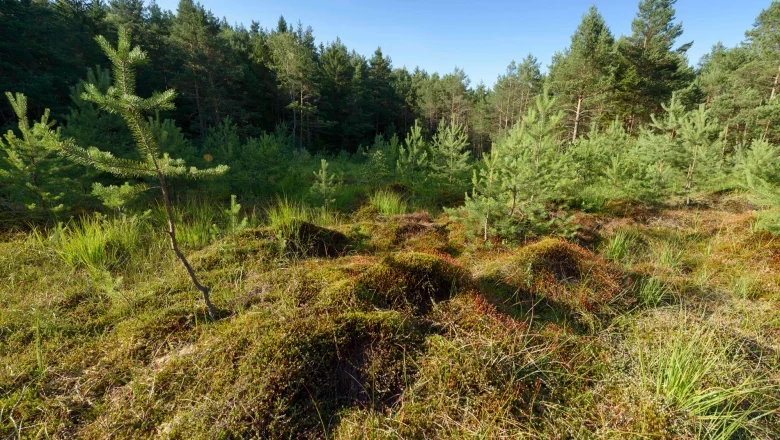
Peat was cut in the Haslauer Moor until 1980, which was used as fuel for the glassworks. The two water-filled peat pits are still visible, but are now overgrown by moss carpets and aquatic plants. Since its inclusion in the Natura 2000 protection program, the moor has been slowly but surely regenerating. The Austrian Federal Forests have sealed the drainage ditches and secured the moor as a natural forest reserve. Today the reserve covers 30 hectares, whereas it used to be 120 hectares.
On a hike through the moor, visitors can expect impressive impressions: colorful moss cushions with cranberries, sparse birch and pine forests like something out of a storybook and the intensely fragrant, poisonous marsh pore with its resinous, camphor-like aroma. In spring, even rare moor frogs show off their bright blue mating colors.
Numerous granite rocks such as Weinsberger and Eisgarner granite rise up around the moor. Particularly striking is the Wasserstein, right next to the moor, in which you can discover the carved abbreviation of the Herrschaft Schrems (HS). The granite rock serves as a landmark on the 11-kilometre-long "Pfad" hiking trail, which leads to the most beautiful parts of the moor. You should plan around three hours for the route. To protect the sensitive ecosystem, most of the trail runs over wooden walkways and bridges.
A moor rarely comes alone: the Heidenreichstein moor and the Schrems high moor are also valuable habitats for animals and plants and are well worth a visit.