The circular ditch enclosure in Kamegg
Historical sites
Description
In addition to the medieval ruins of Kamegg, several prehistoric sites are known. The most important of these is a circular ditch from the Middle Neolithic period.
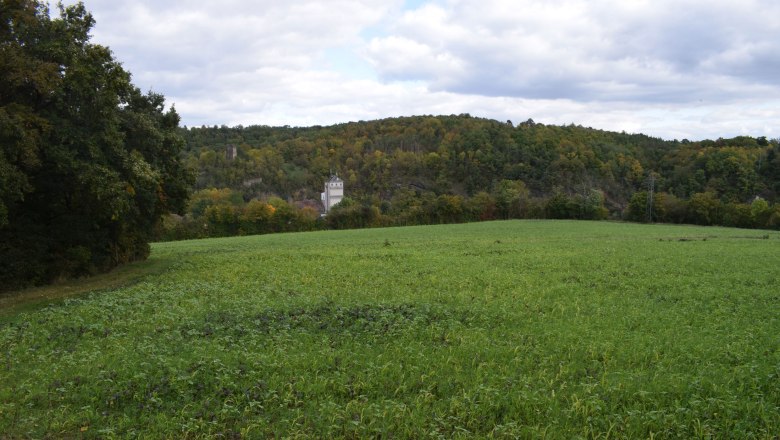
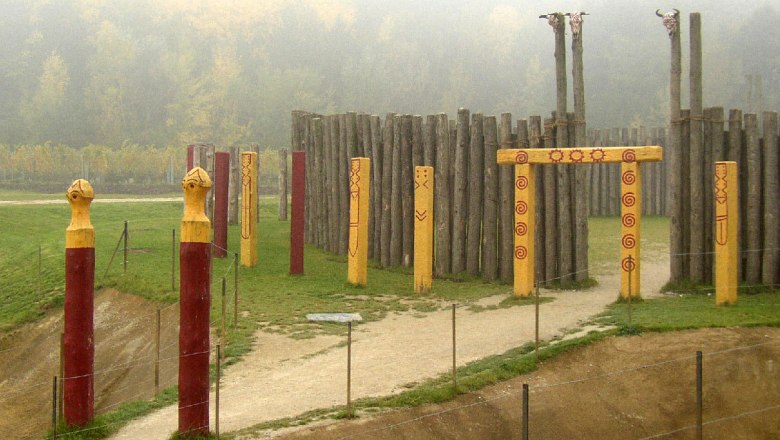
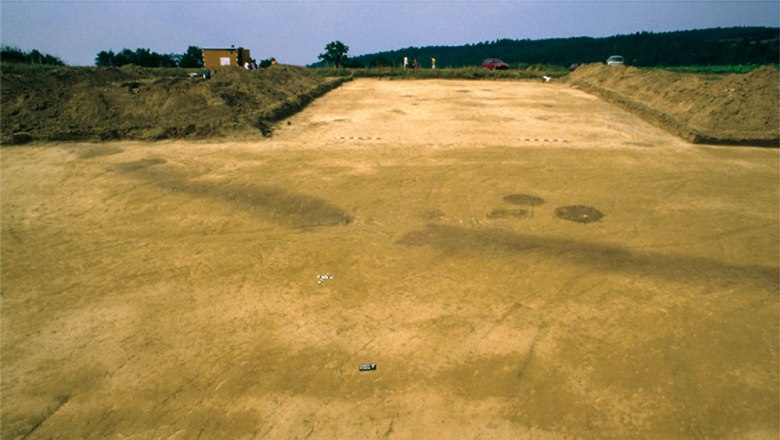
One of the largest circular ditches in Lower Austria was located on a southeast-facing slope above the Kamp bend near Kamegg. These are circular ditches from the early phase of the Middle Neolithic period (4750 to 4600 BC), which were built in large parts of Central Europe. The purpose of these enclosures is still not clear; they probably had a cult function, perhaps as a meeting place for special ceremonies. The diameter, the number of ditches and the number and orientation of the gates were not the same everywhere. Despite many attempts, it has not yet been possible to prove that the gates were generally aligned according to astronomical principles.
The monumental building at Kamp
The circular ditch complex at Kamegg had two concentric ditches with palisades on the inside. The inner ditch was five to eight meters wide and had a diameter of 76 meters. The outer ditch had a diameter of 144 meters. However, only a few isolated ditch segments were excavated on the southern flank, so the construction was obviously not completed. This unique finding illustrates how these monumental buildings were erected a good 6,500 years ago.
Settlement from the Neolithic period
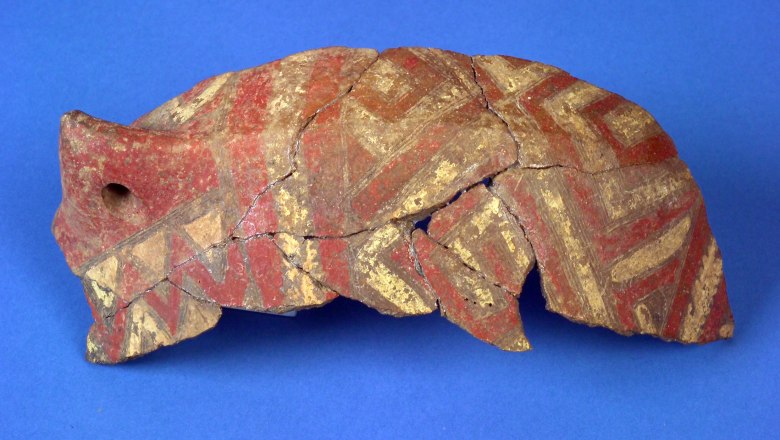
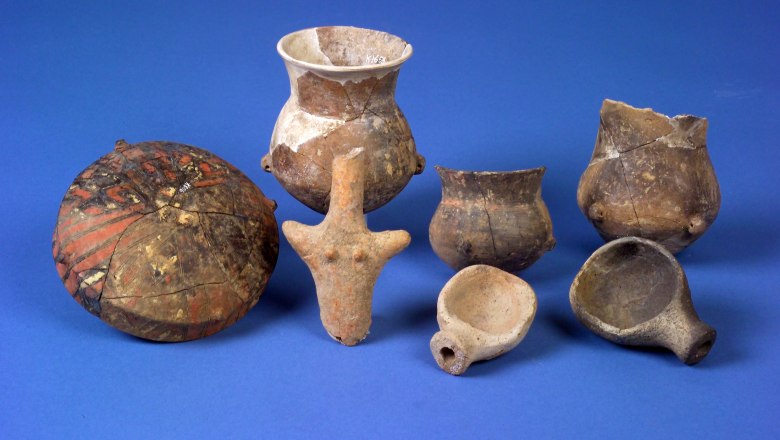
We do not know what prompted people to demolish the building and leave the circular ditch to decay. However, the nearby Neolithic settlement clearly outlasted the circular ditch. Although the excavations were unable to document the floor plans of any houses, finds from the former storage pits provided many insights into life back then. Botanical investigations of the sediment yielded the remains of many useful plants, including lentils, strawberries, dirndls and wild pears; the oldest evidence of millet in Austria is particularly noteworthy.
Tip: The finds from the excavations at Kamegg can now be found in the Höbarth Museum in the town of Horn.